Get free quotes from SCADA consulting near you
Takes about a minute. Free, no obligation; providers reply to you directly.
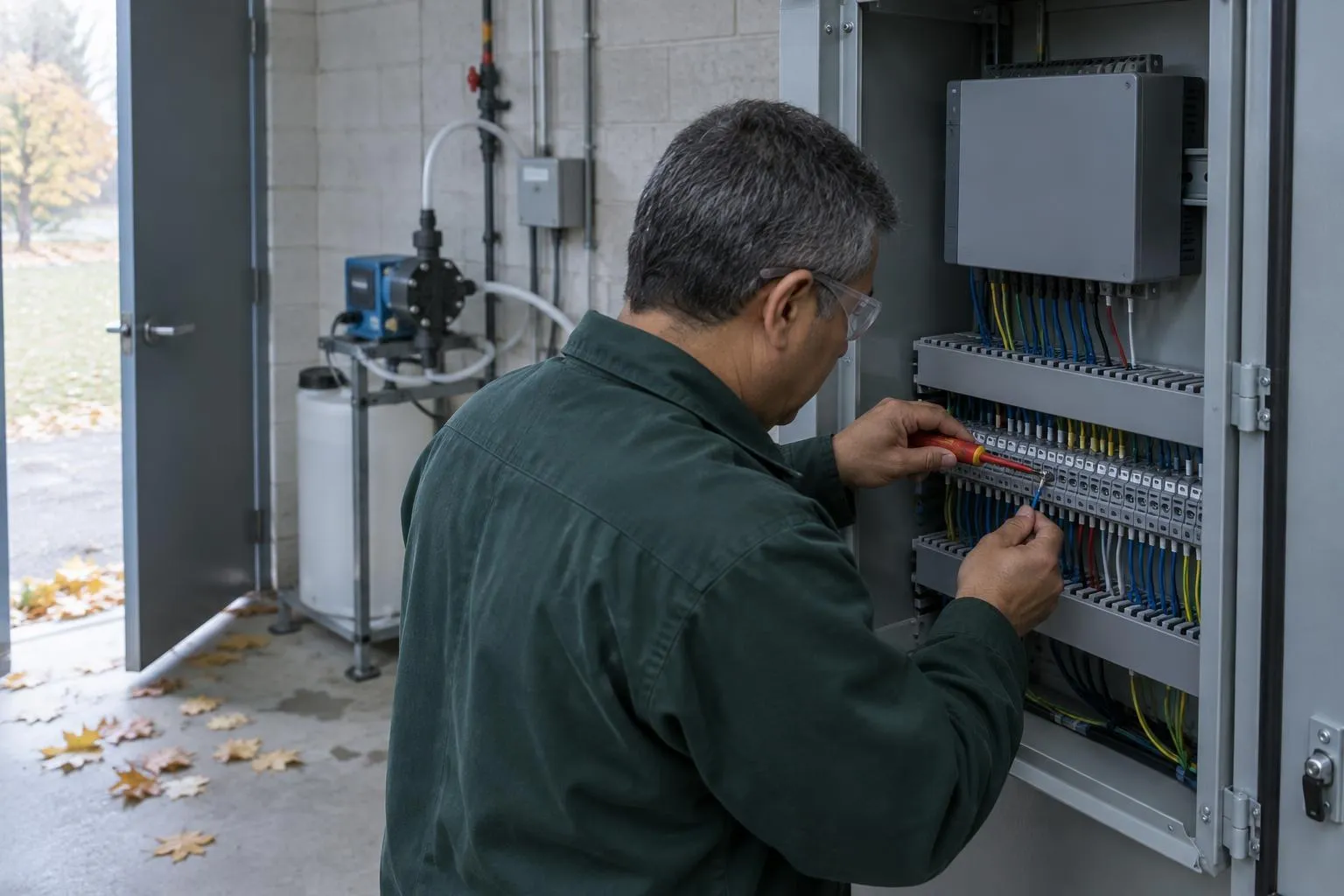
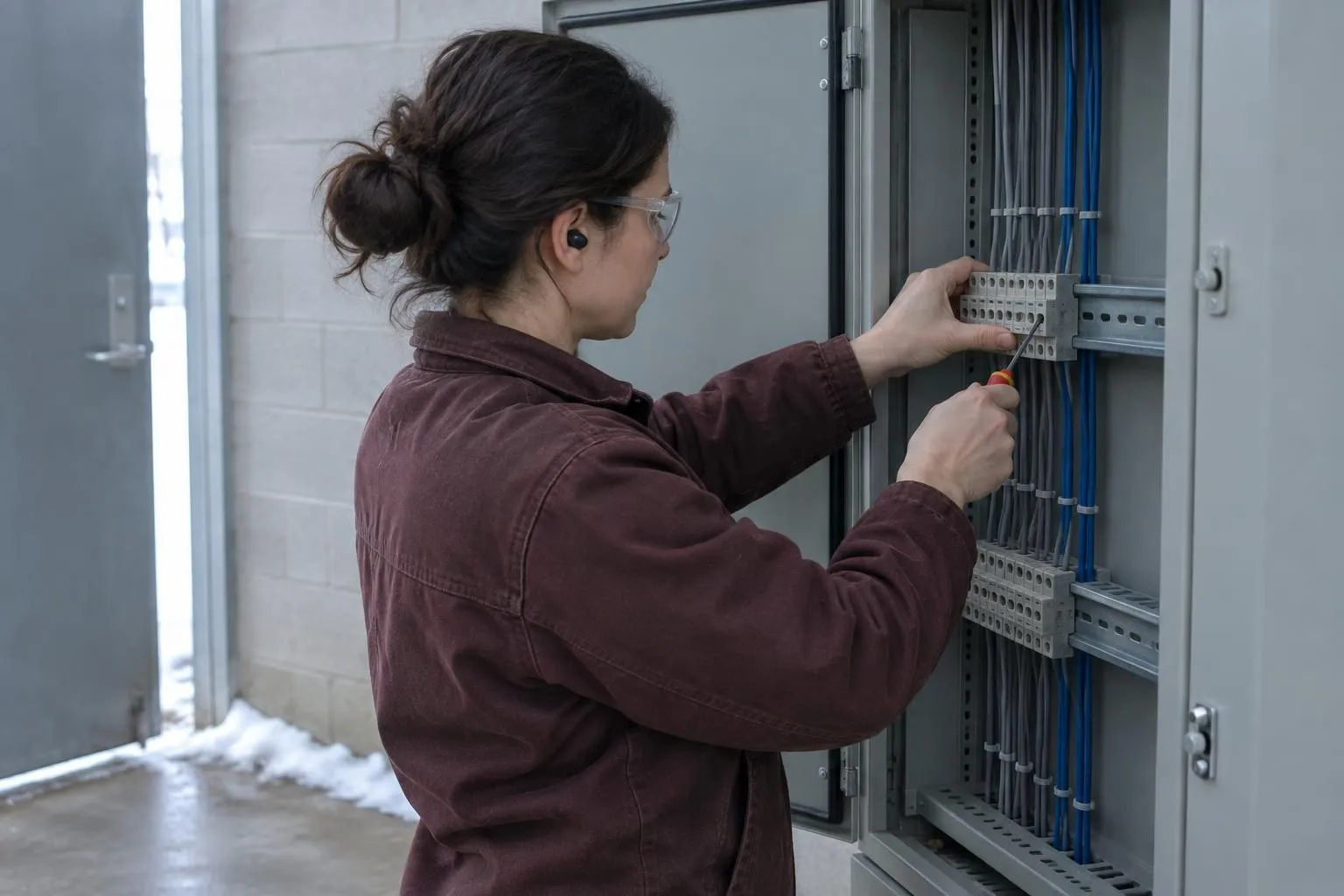
A plant engineer I know spent three weeks going back and forth with a remote SCADA consultant trying to diagnose a PLC communications fault — Zoom calls, screen shares, log dumps, the whole routine. The consultant was sharp. The problem turned out to be a loose terminal block that took a local tech forty-five seconds to find once they were actually standing in the cabinet.
That’s not an argument against remote SCADA consulting. It’s an argument for knowing which problems remote actually solves.
The Short Version:Remote SCADA consultants are legitimate, cost-effective, and post-pandemic the norm for most configuration, programming, and monitoring work. You need someone on-site for hardware commissioning, physical audits, and anything where the answer might be “it’s the wire.”
Key Takeaways
- Remote SCADA consulting saves 20–50% on rates and enables 24/7 multi-site coverage that on-site teams can’t match economically
- On-site is non-negotiable for hardware commissioning, physical network segmentation work, and NERC CIP compliance walkthroughs
- The hybrid model — remote for routine, on-site for escalation — is now the industry standard, not a compromise
- Cybersecurity requirements (VPN, secure remote access, audit trails) apply either way; remote just makes them more visible
What Remote SCADA Consulting Actually Covers
Here’s what most people miss: the majority of SCADA work is software, configuration, and documentation. PLC logic development, HMI screen builds, historian configuration, OPC-UA tag mapping, cybersecurity assessments, architecture reviews — none of this requires physical presence. A credentialed consultant with a GICSP or ISA/IEC 62443 certification can review your network diagrams, audit your Purdue model segmentation, and deliver a remediation roadmap without ever setting foot in your facility.
Remote consulting also unlocks talent that geography used to wall off. A water utility in rural Montana can now hire the same SCADA security specialist that a Houston refinery uses. The rate differential is real: remote IT consultants run 20–50% less than equivalent on-site work, with outsourced technical roles costing $40K–$80K/year equivalent versus $200K–$300K for in-house staff (Upwork and Glassdoor, 2025).
The post-pandemic reality check is that firms operating fully remote consulting models report higher profitability — eliminated travel expenses, better consultant utilization, lower attrition. Inductive Automation’s Ignition training data backs this up: virtual and in-person curricula produce identical project outputs. The material translates. The hands-on work is the question.
Pro Tip:When vetting a remote SCADA consultant, ask specifically about their secure remote access setup — VPN architecture, jump server configuration, and whether they carry documentation for regulatory audit trails. This separates professionals from freelancers.
When You Absolutely Need Someone in the Room
I’ll be honest: there’s a category of SCADA work where remote is not a workaround, it’s a liability.
Hardware commissioning. Loop checks, I/O verification, panel termination review — these require physical presence. No amount of video feed substitutes for a trained eye on a terminal strip or a hand on a current loop.
Network segmentation implementation. You can design DMZ architecture remotely all day. Actually racking switches, running cable, and verifying physical isolation requires boots on the floor.
Compliance audits with physical scope. NERC CIP physical security requirements, ISA/IEC 62443 zone and conduit verification, and many insurance-driven OT security audits specify on-site inspection. The auditor has to see the room.
Mission-critical downtime. When a turbine controller goes offline at 2 AM and the plant is losing $50K/hour, remote diagnostics are step one — but having a local resource who can physically cycle power, swap a module, or trace a ground fault is what actually ends the outage. On-site support cuts response time to near-zero for these scenarios in ways that remote physically cannot replicate.
Reality Check:Remote consultants can diagnose most control logic issues faster than on-site teams because they’re not dealing with travel time or facility badging. But “faster diagnosis” and “faster resolution” are different things when the fix is physical.
The Comparison: Remote vs. On-Site vs. Hybrid
| Factor | Remote | On-Site | Hybrid |
|---|---|---|---|
| Cost | 20–50% lower rates, no travel fees | Higher — travel, lodging, per diem | Variable; remote baseline + on-site escalation |
| Response time | Immediate for software/config issues | Near-zero for physical issues | Best of both with defined escalation triggers |
| Coverage | 24/7 across multiple sites easily | Single site, scheduling-dependent | Scalable with on-site reserve |
| Best for | PLC programming, HMI, monitoring, cyber assessments | Commissioning, hardware, compliance audits | Most real-world operations |
| Security overhead | VPN, secure access tools required | Physical access controls | Both, with clear protocols |
| Talent pool | Global — geography irrelevant | Local or travel-cost justified | Flexible |
The hybrid model wins for ongoing support relationships. Use remote for routine monitoring, software updates, performance tuning, and cybersecurity advisory. Define specific escalation triggers in your SLA — hardware failure, field device replacement, physical audit — and have an on-site resource or local contractor on retainer for those moments.
Nobody tells you this in the standard vendor pitch: the escalation protocol matters more than the model. A remote-first engagement without a defined on-site escalation path is the setup for that terminal block story at the top.
Post-Pandemic Ground Truth
Virtual consulting is now standard across professional services, not a fallback. Firms that resisted it pre-2020 largely adopted it out of necessity and didn’t go back. The productivity data supports this, and SCADA consulting is no different.
What changed isn’t the capability — it’s the tooling and the norms. Secure remote access to OT networks used to be a security nightmare. Today, properly configured VPNs with multi-factor authentication, read-only historian access for diagnostics, and full audit logging are table stakes for any credentialed OT consultant. The compliance documentation is cleaner, not worse.
The residual bias toward on-site is mostly institutional inertia and proximity bias — a real phenomenon where remote contributors get underweighted in decisions simply because they’re not physically present. That’s a management problem, not a capability problem.
Practical Bottom Line
If you’re scoping a SCADA engagement, start here:
- Define the work type. Software, configuration, assessment, or architecture? Remote is likely fine. Commissioning, hardware, or physical compliance? Budget for on-site.
- Ask about secure remote access protocols before signing anything. Regulatory environments (utilities, water/wastewater, energy) have specific requirements; your consultant should know them cold.
- Build an escalation path into the contract. Remote-first with defined on-site triggers beats a purely on-site engagement for cost and coverage.
- Don’t discount geography entirely. Time zone alignment for 24/7 monitoring matters. A consultant four time zones off can still cover nights — just verify the SLA reflects it.
For a deeper look at what credentialed SCADA consultants actually deliver and how to vet them, start with The Complete Guide to SCADA Consultants. If you’re evaluating consultants for a specific control system modernization, the work scope framing there applies directly to the remote-vs-on-site question.
The right answer isn’t remote or on-site. It’s knowing which one you actually need for the work in front of you.
Done reading? Get quotes from SCADA consultants near you.
Takes about a minute. Free, no obligation; providers reply to you directly.
Popular cities:
Nick built this directory to help plant engineers and utilities find credentialed SCADA consultants without wading through vendors who mostly want to sell proprietary hardware — a conflict of interest he ran into when evaluating control system upgrades for an industrial facility.